Ambient Lighting Ideas: How to Make a Room Feel Finished Without Overlighting It

The best ambient lighting ideas use several soft sources instead of one bright fixture: dimmable ceiling light, lamps at seated eye level, hidden LED strips, wall wash, shelf lighting, and warm 2700K to 3000K bulbs. A room usually feels finished when light reaches the walls and corners without glare, while task lighting stays separate for reading, cooking, makeup, desks, and cleaning.
Ambient Lighting Ideas: How to Make a Room Feel Finished Without Overlighting It
Ambient lighting ideas work best when they make the room feel complete, not brighter for the sake of being brighter. A finished room usually has light on the walls, a soft ceiling or lamp layer, enough glow in the corners, and separate task lighting where people actually read, cook, dress, or work. When one ceiling fixture tries to do everything, the floor may be bright while faces, shelves, art, and corners still look flat.
Quick answer {#quick-answer}
The best ambient lighting ideas use three to five gentle sources instead of one high-output fixture. Start with a dimmable overhead or cove layer, add lamps or wall lights around seated areas, use hidden LED strips or shelf lighting to brighten vertical surfaces, and keep color temperature warm in relaxing rooms. For most living rooms and bedrooms, 2700K to 3000K is the safest range. For kitchens, baths, and offices, use warmer ambient light around the edges and clearer task light where work happens.
Ambient light should make the room easy to enter, comfortable to sit in, and visually balanced. It should not be the only light for detailed tasks. If people keep turning the ambient layer up because they cannot read, chop food, apply makeup, or work at a desk, the room needs task lighting, not more general brightness.
For the basics of Kelvin, lumens, and room-by-room planning, see our [room lighting guide](/blog/room-lighting-guide-color-temperature-lumens-layers). For strip-based glow that stays comfortable, pair this with our [comfortable LED strip lighting guide](/blog/comfortable-led-strip-lighting-power-diffusion-placement).
Ambient, task, and accent lighting are different jobs {#ambient-vs-task-accent}
Ambient lighting is the general light that lets you move through a room and see the shape of the space. Task lighting is targeted light for a specific activity. Accent lighting draws attention to a wall, shelf, plant, art piece, texture, ceiling edge, or architectural detail.
The mistake is asking ambient light to solve all three jobs. A bright ceiling fixture can make the center of the room visible, but it often creates glare and shadows while leaving the walls dull. A table lamp can make a reading chair cozy, but it may not light a pathway. A hidden strip behind a shelf can add depth, but it cannot replace a desk lamp.
Think of ambient light as the base exposure of the room. It should be soft, broad, and easy to dim. Task lights can be brighter and more focused. Accent lights can be lower output but more directional. Once those jobs are separated, the room feels calmer because every fixture has a reason to exist.
The U.S. Department of Energy describes LED lighting as efficient, long-lasting, and controllable compared with older technologies: https://www.energy.gov/energysaver/led-lighting. That controllability is what makes layered ambient lighting practical. You can keep the room soft most of the evening, then raise only the zones that need more light.
ENERGY STAR also notes that LED bulbs use much less energy and last longer than traditional incandescent bulbs: https://www.energystar.gov/products/lighting_fans/light_bulbs/learn_about_led_bulbs. In a layered room with several lamps and strips, efficient LEDs let you spread light around without treating every added source as a major energy penalty.
How many lighting layers should a room have? {#layers}
Most finished rooms need at least three light sources. Larger rooms, open plans, and rooms with dark finishes may need five or more. Count layers by function, not by fixture count.
A living room might use:
- A dimmable ceiling fixture or recessed lights for general movement.
- A floor lamp beside the main seating area.
- A table lamp or wall sconce on the opposite side of the room.
- Hidden LED strip lighting behind shelves, a media unit, or a ceiling cove.
- A small accent light for art, plants, or textured walls.
A bedroom might use:
- A soft overhead or cove layer for entering the room.
- Bedside lamps or sconces for reading.
- A low LED strip under the bed or dresser for nighttime movement.
- A closet or vanity task light that turns on only when needed.
The goal is not to turn every layer on at once. The goal is choice. Morning, cleaning, reading, movie night, and late-night movement need different lighting levels. A room feels more expensive when it can shift without effort.
Where should ambient light be placed? {#placement}
The best ambient lighting usually lights vertical surfaces. Walls, shelves, curtains, cabinets, and ceiling edges are what people see at eye level. If those surfaces stay dark, the room can feel unfinished even when a ceiling fixture measures as bright.
Start by checking the corners. Dark corners make a room feel smaller. A floor lamp, wall sconce, uplight, shelf strip, or picture light can often do more than a brighter bulb in the middle of the ceiling.
Next, check glare lines. If you can see bare LED dots, exposed bulbs, or a bright strip from normal seated positions, the light source needs shielding, diffusion, or a different location. Hidden LEDs work best behind a lip, inside an aluminum channel, behind a headboard, under a cabinet edge, above crown molding, or along a shelf where the source is not directly visible.
Finally, check reflections. Glossy stone, glass tables, TVs, mirrors, polished tile, and dark windows can reflect bright points of light. In those spaces, diffusion matters more than raw output. Use fabric shades, frosted lenses, wall wash, cove lighting, or bounce light instead of exposed points.
What color temperature works best for ambient lighting? {#color-temperature}
For most homes, ambient lighting should sit between 2700K and 3000K. That range feels warm without becoming too orange. It also blends well with wood, textiles, warm paint, skin tones, and evening routines.
Use this as a starting point:
| Room or zone | Best ambient color temperature |
|---|---|
| Living room | 2700K to 3000K |
| Bedroom | 2200K to 3000K, dimmed at night |
| Dining room | 2700K to 3000K |
| Kitchen ambient edges | 2700K to 3000K |
| Kitchen task counters | 3000K to 3500K |
| Bathroom ambience | 2700K to 3000K |
| Home office ambience | 3000K to 3500K |
Avoid mixing random color temperatures in the same view. A 2700K lamp next to a 5000K ceiling light makes the room feel patched together. If task lighting needs to be cooler, keep it localized and use warmer ambient light around the room.
Color rendering also matters. Choose CRI 90+ when possible for lamps and fixtures near faces, art, wood, stone, paint, and textiles. A low-quality bulb can technically have the right Kelvin number while making the room look dull.
How to avoid overlighting a room {#overlighting}
Overlighting happens when every problem is solved with more lumens. The room becomes bright, but not necessarily better. Common signs include glare from bare bulbs, washed-out walls, harsh shadows under eyes, bright floors with dark corners, and lamps that are too powerful to leave on comfortably.
Use dimmers wherever practical. A fixture that is slightly too bright at full output may be perfect at 40 percent. Put ceiling, lamp, strip, and accent layers on separate controls when possible. One switch for the whole room forces every scene to use the same brightness.
Choose lower output in more places. Two soft lamps across a room usually feel better than one powerful lamp in a corner. A dim shelf strip plus a warm floor lamp can make a living room feel finished without pushing the ceiling fixture high.
Keep task light close to the task. Reading lamps belong near books. Counter light belongs near counters. Vanity light belongs near faces. When task lighting is missing, people compensate by raising ambient light until the whole room feels harsh.
Also watch ceiling-only plans. Recessed lights can be useful, but too many downlights create a grid of bright cones. For comfortable homes, use them sparingly, dim them, and balance them with wall, lamp, and indirect light.
Room-by-room ambient lighting ideas {#room-examples}
In a living room, start with the seating area. Place one lamp near the main sofa, one softer source across the room, and one indirect source behind shelves, the TV wall, or a ceiling edge. Keep the TV wall glow low enough that it supports the screen without competing with it. Our [living room lighting trends guide](/blog/living-room-lighting-trends-2026-warm-led-layers) shows how warm LEDs, lamps, and hidden strips work together.
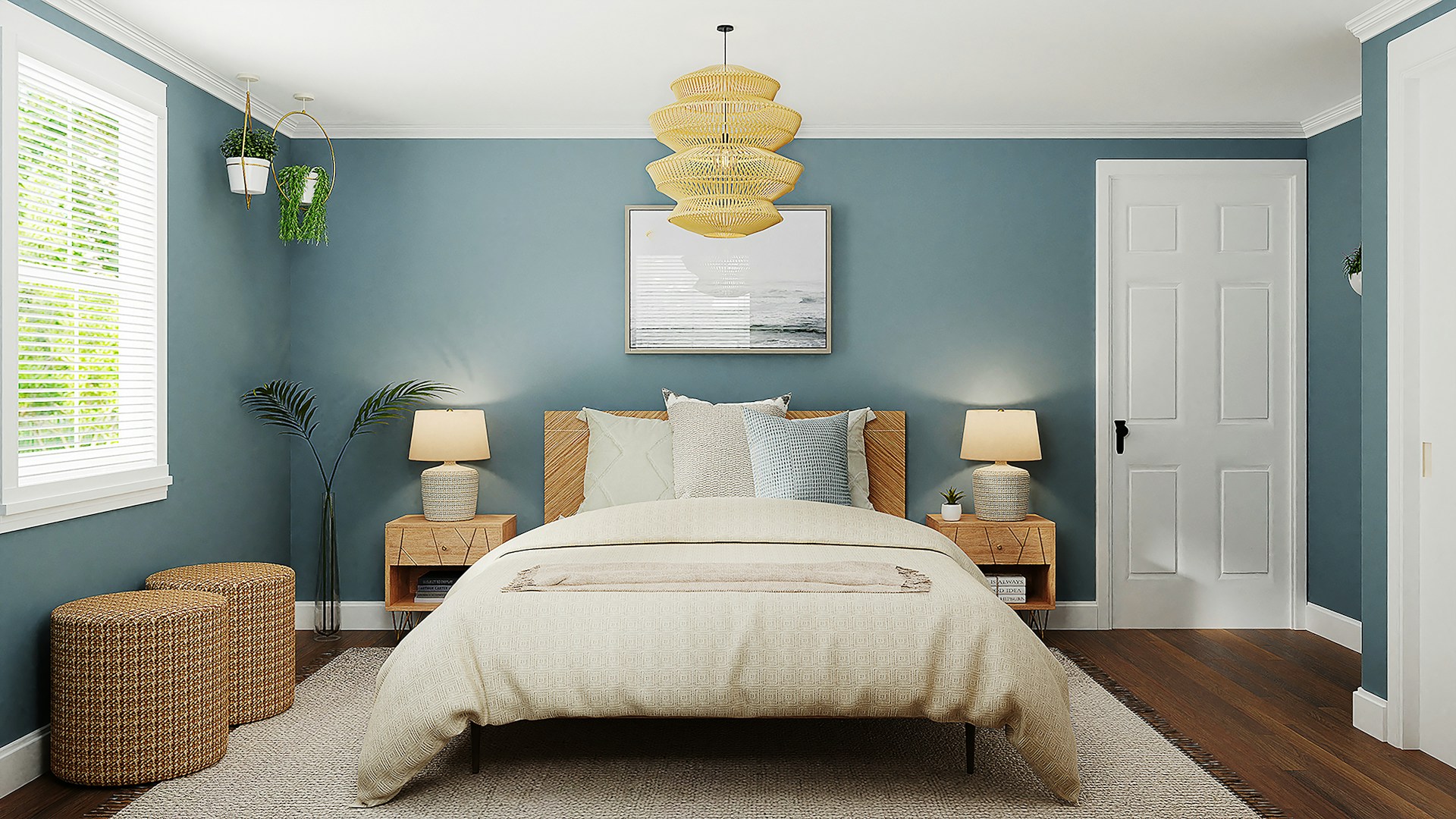
In a bedroom, make the bed feel anchored. Bedside lamps or sconces should handle reading. Ambient light can come from a dim ceiling fixture, cove, headboard strip, or warm lamp on a dresser. A low under-bed strip is useful for nighttime movement, but it should be very dim and warm.
In a kitchen, keep the ambient layer separate from the task layer. Toe-kick lighting, above-cabinet glow, pendants, and soft ceiling light can make the kitchen comfortable in the evening. Under-cabinet light should handle counters. That separation keeps the kitchen usable without making the whole open-plan space too bright.
In a hallway or small room, use wall wash instead of a single hot spot. A sconce, picture light, hidden shelf strip, or small uplight can make narrow spaces feel more intentional. Light bouncing off walls is often more flattering than a bright ceiling dome.
In a bathroom, use ambient light for the room and dedicated vanity light for faces. A backlit mirror may add beautiful glow, but it is not always enough for grooming. Keep nighttime light low and warm so late use does not feel jarring.
A practical ambient lighting checklist
Before buying another fixture, walk the room at night and check:
- Are the corners too dark?
- Can you see bare bulbs or exposed LED dots?
- Are the walls lit, or only the floor?
- Is there separate task light where people read, cook, dress, or work?
- Do all major lights dim?
- Do the color temperatures match within the same view?
- Is the TV, mirror, glass, or glossy counter reflecting bright points?
- Can the room support a low evening scene without feeling gloomy?
The best ambient lighting ideas are usually quiet. They make the room feel considered, balanced, and comfortable without making the lighting itself the loudest thing in the space.
FAQ {#faq}
How many lighting layers should a room have?
Most rooms feel better with at least three light sources: a soft ambient layer, a task light for specific activities, and an accent or wall layer for depth. Larger rooms may need five or more sources spread around the space.
How do ambient, task, and accent lighting work together?
Ambient lighting gives the room general visibility. Task lighting adds focused brightness for reading, cooking, grooming, or work. Accent lighting adds depth by highlighting shelves, art, walls, plants, or architectural details.
What common mistakes make home lighting feel harsh?
The most common mistakes are relying on one bright ceiling fixture, using bulbs that are too cool, leaving LED strips exposed, skipping dimmers, mixing random Kelvin values, and trying to solve task-lighting problems with more general brightness.
What color temperature is best for ambient lighting?
Use 2700K to 3000K for most living rooms, bedrooms, and dining rooms. Use 3000K to 3500K for offices or task-adjacent ambient light. Keep very cool 4000K to 5000K light out of relaxed evening rooms.
Are LED strips good for ambient lighting?
Yes, when they are hidden, diffused, and dimmed. Use LED strips behind shelves, headboards, media units, coves, cabinets, or toe kicks. Avoid exposed dots unless the strip is fully concealed from normal viewing angles.
Frequently Asked Questions
How many lighting layers should a room have?
Most rooms feel better with at least three light sources: a soft ambient layer, a task light, and an accent or wall layer. Larger rooms may need five or more.
How do ambient, task, and accent lighting work together?
Ambient lighting gives general visibility, task lighting adds focused brightness for activities, and accent lighting adds depth by highlighting walls, shelves, art, plants, or architecture.
What common mistakes make home lighting feel harsh?
Relying on one bright ceiling fixture, using bulbs that are too cool, exposing LED strips, skipping dimmers, mixing Kelvin values, and using ambient light for task problems are the biggest mistakes.

