Modern Lighting Design 2026: Layered Light Plans That Make a Space Feel Finished

Modern lighting design in 2026 works best as a layered plan: soft ambient light for the room, focused task light where people read or work, and low-glare accent light on walls, shelves, art, cabinets, or architectural edges. Use 2700K to 3000K for relaxed rooms, 3000K to 3500K for kitchens and bathrooms, and dimming everywhere people spend time at night.
Modern Lighting Design 2026: Layered Light Plans That Make a Space Feel Finished
Modern lighting design in 2026 is less about buying one dramatic fixture and more about building a room that works at different times of day. A finished room usually has a soft ambient layer, a focused task layer, and a quiet accent layer. When those three are balanced, the furniture looks better, corners stop feeling flat, and the room can shift from bright daytime function to relaxed evening comfort.
Quick answer {#quick-answer}
For most homes, a modern lighting design plan should use three to five light sources per main room. Start with dimmable ambient light, add task lighting where people read, cook, dress, groom, or work, then add accent lighting to shelves, walls, plants, art, cabinets, or ceiling edges. Use 2700K to 3000K in bedrooms, living rooms, and dining rooms. Use 3000K to 3500K in kitchens and bathrooms. Keep 4000K for utility rooms, laundry areas, garages, and work-focused spaces.
The U.S. Department of Energy notes that LED lighting is efficient, long-lasting, and highly controllable compared with older technologies: https://www.energy.gov/energysaver/led-lighting. That control is the reason modern rooms can be layered without wasting energy. Energy Star also points out that qualified LED products use far less energy and last much longer than incandescent bulbs: https://www.energystar.gov/products/lighting_fans/light_bulbs/learn_about_led_bulbs. In practice, that means a room can have more sources without feeling expensive to operate.
If you want the shorter technical version first, our [room lighting guide](/blog/room-lighting-guide-color-temperature-lumens-layers) covers Kelvin, lumens, and layers room by room.
The three layers that make a room feel finished {#three-layers}
Modern lighting design starts with ambient lighting, but it should not end there. Ambient light is the room's general visibility layer. It can come from recessed lights, a ceiling fixture, lamps, sconces, cove lighting, or indirect LED strips. The goal is not maximum brightness. The goal is comfortable overall light with no harsh glare.
Task lighting is the second layer. This is the light that helps someone do something specific: read on the sofa, chop vegetables, put on makeup, work at a desk, fold laundry, or choose clothes in a closet. Task light needs to be placed close enough to the activity that it actually helps. A beautiful ceiling fixture does not count as kitchen task lighting if your body casts a shadow over the counter.
Accent lighting is the layer that creates depth. It can highlight a textured wall, a bookcase, a plant, a painting, a headboard, a media wall, a niche, or the underside of a floating shelf. Good accent lighting is usually lower in brightness than people expect. It should make surfaces glow, not compete with the room.
The best rooms combine all three. A living room with only recessed downlights may be bright, but it can feel flat. Add a floor lamp for reading, a shelf strip behind books, and a warm table lamp across the room, and the same space suddenly feels intentional.
Room-by-room modern lighting plan {#room-by-room}
Living room
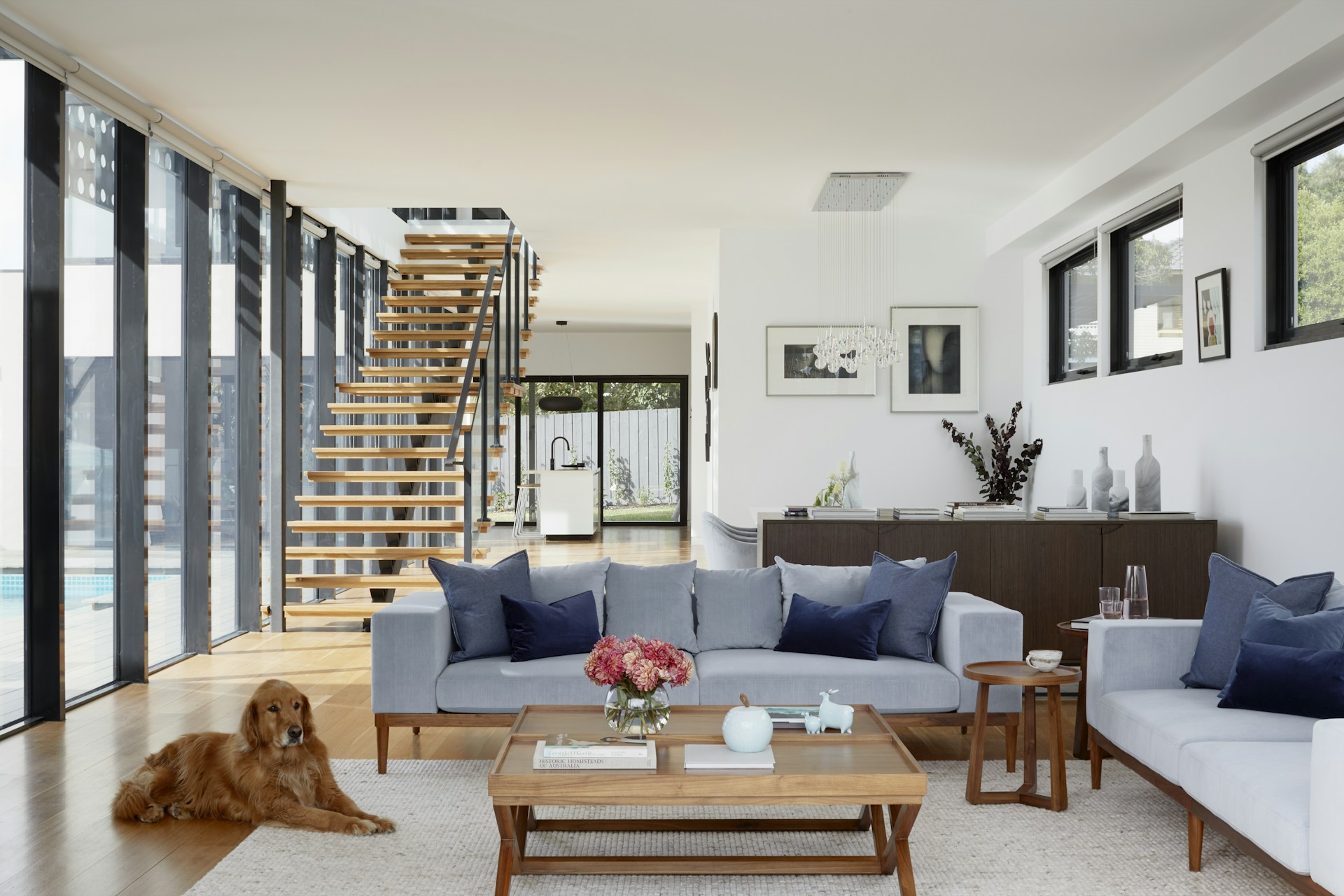
Living rooms need flexibility because they support conversation, reading, TV, hosting, and quiet evenings. Start with soft ambient light from a dimmable ceiling fixture, wall sconces, lamps, or cove lighting. Add task light near the main seating position. Then add accent light to shelves, the TV wall, artwork, or a textured wall.
For TV walls, keep the glow behind or around the screen low. Bias lighting should soften contrast without pulling attention away from the picture. If the wall is brighter than the TV image, the setting is too high.
Bedroom
Bedrooms should feel calm first and practical second. Use warm 2700K to 3000K lighting, and avoid relying on one bright overhead source. Bedside lamps or sconces should handle reading. A low cove, headboard strip, dresser lamp, or under-bed strip can provide evening and nighttime light.
The bedroom is one of the worst places for cool daylight bulbs. They can make the room feel alert at the exact time it should be winding down. If you want smart controls, use them for dimming and scene changes rather than constantly shifting through saturated colors.
Kitchen
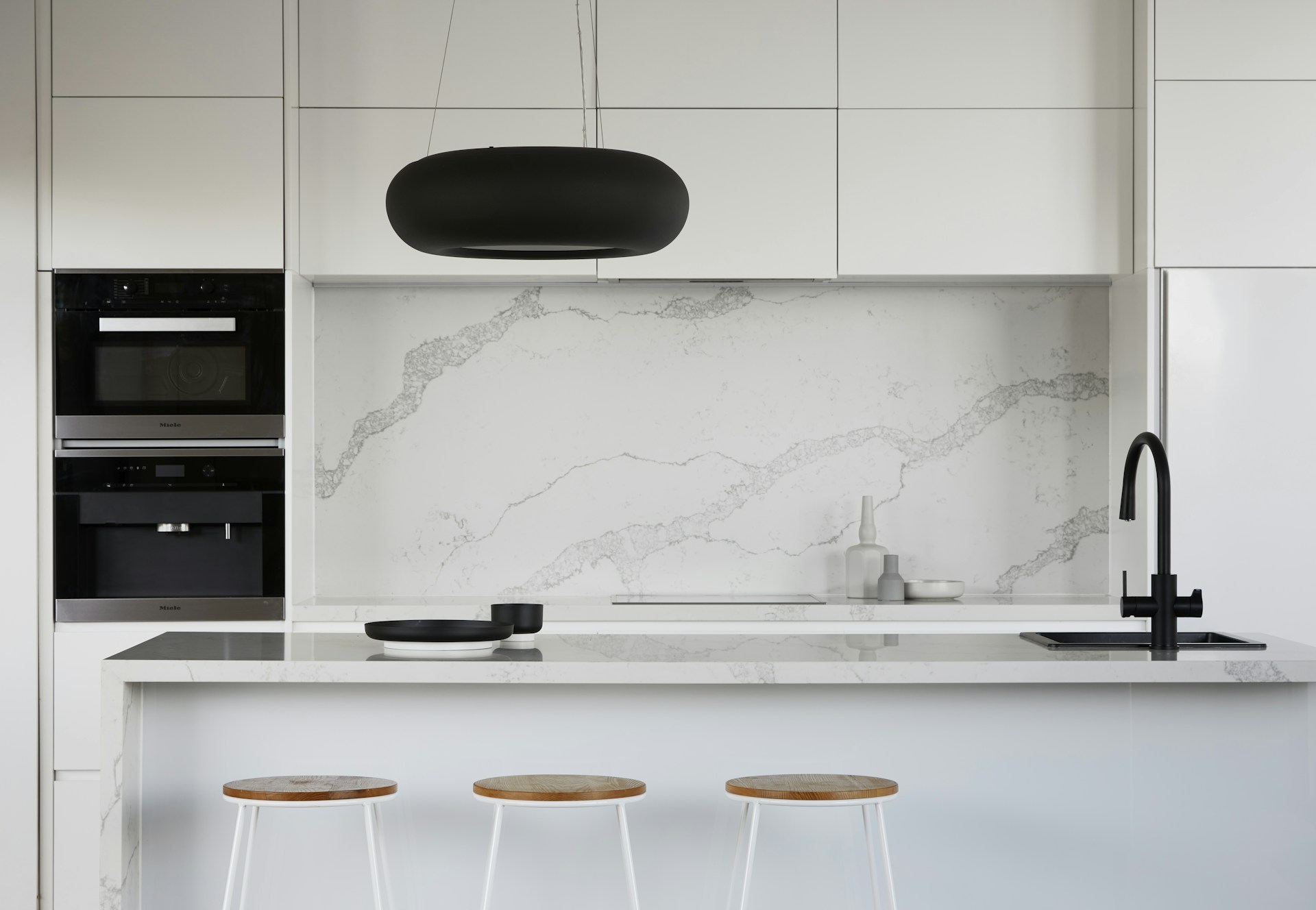
Kitchens need clear separation between ambient light and task light. Ceiling lights help the room feel open. Under-cabinet lighting handles counters. Pendants can support islands or dining zones. Toe-kick lighting or above-cabinet glow can create a soft evening layer after cooking is finished.
Use 3000K for most kitchens. Choose 3500K when the room is modern, white, gray, or very prep-focused. Under-cabinet lighting should sit near the front underside of the cabinet so the light lands on the counter, not just the backsplash. Our [under cabinet lighting guide](/blog/best-under-cabinet-lighting-kitchen-guide) explains that placement in detail.

Bathroom
Bathrooms need flattering facial light and comfortable room light. A backlit mirror can look beautiful, but it is not always enough for grooming. Use vertical sconces or well-diffused mirror lighting near face height when possible. Add ambient ceiling light for the room, and keep a low nighttime setting for late use.
For most bathrooms, 3000K to 3500K is the useful range. Too warm can make grooming less clear. Too cool can make skin and tile feel clinical.
Home office
A home office needs glare control as much as brightness. Place the task lamp so it lights the work surface without reflecting in the screen. Use ambient light to reduce contrast between the monitor and the room. Add a shelf, wall, or background accent only if it does not create screen glare.
For offices, 3000K to 4000K can work. If the office is part of a bedroom or living room, lean warmer and use a dedicated desk lamp for work intensity.
Color temperature by room {#color-temperature}
Color temperature should follow the room's purpose. Warm light feels relaxing. Neutral light feels clearer. Cool light can be useful in work zones, but it often feels harsh in residential rooms after sunset.
Use this practical range:
| Room or zone | Best Kelvin range |
|---|---|
| Living room | 2700K to 3000K |
| Bedroom | 2700K to 3000K |
| Dining room | 2700K to 3000K |
| Kitchen ambient | 3000K to 3500K |
| Kitchen counter task | 3000K to 3500K |
| Bathroom vanity | 3000K to 3500K |
| Home office | 3000K to 4000K |
| Laundry, garage, utility | 3500K to 4000K |
The key is consistency within sightlines. A 2700K lamp beside a 5000K ceiling light can make a room feel patched together. If an open-plan kitchen and living room share one view, keep the main sources close enough in color that the transition feels deliberate.
Placement rules that make lighting look designed {#placement}
First, light vertical surfaces. Walls, shelves, cabinet faces, curtains, and art affect how bright a room feels. A room can have plenty of lumens on the floor and still feel dull if the walls are dark. Wall washing, shelf lighting, and sconces often make a room feel more polished than adding another ceiling light.
Second, hide LED strips unless the strip itself is designed to be visible. Bare dots under shelves or behind furniture usually look temporary. Use aluminum channels, diffusers, coves, toe kicks, cabinet lips, or furniture edges to conceal the source. Our [comfortable LED strip lighting guide](/blog/comfortable-led-strip-lighting-power-diffusion-placement) covers diffusion and power planning.
Third, keep light away from eye level glare. A fixture can be beautiful when off and annoying when on. Sit where people actually sit, stand at the counter, look toward mirrors and screens, and check whether any bare source reflects into your eyes.
Fourth, use dimmers as part of the design, not as an upgrade later. Modern lighting design depends on scenes. The right living room brightness for cleaning is not the right brightness for dinner. The right kitchen brightness for cooking is not the right brightness for late-night water. Dimming lets one room support multiple moods.
Common mistakes to avoid {#mistakes}
The biggest mistake is treating a room like it needs one center fixture. A single overhead light can be useful, but it rarely makes a space feel complete. It often creates bright spots, dark corners, and unflattering shadows.
The second mistake is choosing bulbs by wattage habit instead of lumens, Kelvin, CRI, and dimming quality. LED products vary widely. Look for the right brightness, color temperature, and compatibility with your dimmer. For kitchens, bathrooms, wardrobes, and anywhere color accuracy matters, choose CRI 90+ when possible.
The third mistake is overusing cool white light. Cool light can help in garages, utility rooms, and certain work areas, but it can make living spaces feel unfinished. Most homes look better with warm or neutral white light and better placement.
The fourth mistake is making accent lighting too bright. Accent light should create hierarchy. If every shelf, strip, lamp, and ceiling fixture is at full output, nothing feels special. Lower the accent layer until it supports the room quietly.
The fifth mistake is ignoring controls. A room with five sources but no easy control can become annoying. Use wall dimmers, grouped smart controls, switched outlets, or simple scene presets so the lighting is easy to use every day.
FAQ {#faq}
How many light layers does a living room or bedroom need?
Most living rooms and bedrooms need at least three sources: ambient light, task light, and accent light. Larger rooms may need five or more sources, but they should still fit into those three roles.
Where should ambient, task, and accent lighting go?
Ambient lighting should spread softly through the room. Task lighting should sit close to the activity, such as a reading chair, desk, counter, vanity, or bedside. Accent lighting should land on walls, shelves, art, plants, cabinets, or architectural edges.
What color temperature works best by room?
Use 2700K to 3000K for bedrooms, living rooms, and dining rooms. Use 3000K to 3500K for kitchens and bathrooms. Use 3500K to 4000K for offices, laundry rooms, garages, and utility spaces.
Are LED strips part of modern lighting design?
Yes, but only when they are hidden, diffused, and dimmable. LED strips work well in coves, shelves, cabinets, toe kicks, media walls, headboards, and under counters. Exposed LED dots usually make a room look cheaper.
What makes a room lighting plan feel expensive?
Expensive-looking lighting is usually about placement and control: warm dimmable sources, lit vertical surfaces, concealed LEDs, task light where it is actually needed, and accent light that adds depth without glare.
Frequently Asked Questions
How many light layers does a living room or bedroom need?
Most living rooms and bedrooms need at least three sources: ambient light, task light, and accent light. Larger rooms may need five or more sources spread around the space.
Where should ambient, task, and accent lighting go?
Ambient light should spread softly through the room, task light should sit close to the activity, and accent light should land on walls, shelves, art, plants, cabinets, or architectural edges.
What color temperature works best by room?
Use 2700K to 3000K for bedrooms and living rooms, 3000K to 3500K for kitchens and bathrooms, and 3500K to 4000K for offices, laundry rooms, garages, and utility spaces.

