Spring 2026 Lighting Trends: Warm Minimalism and Layered Ambient Light

Spring 2026 Lighting Trends: Warm Minimalism and Layered Ambient Light
Every spring, interior design shifts. New palettes emerge, furniture silhouettes evolve, and — quietly driving all of it — lighting trends reshape how rooms feel. Spring 2026 is defined by a single aesthetic principle that has been building momentum for two years: warm minimalism.
If the cold, clinical LED look of the 2010s made your home feel like a hospital corridor, this trend is the antidote. And if you thought "minimalism" meant dark, sparse, and uncomfortable — spring 2026's version will change your mind.
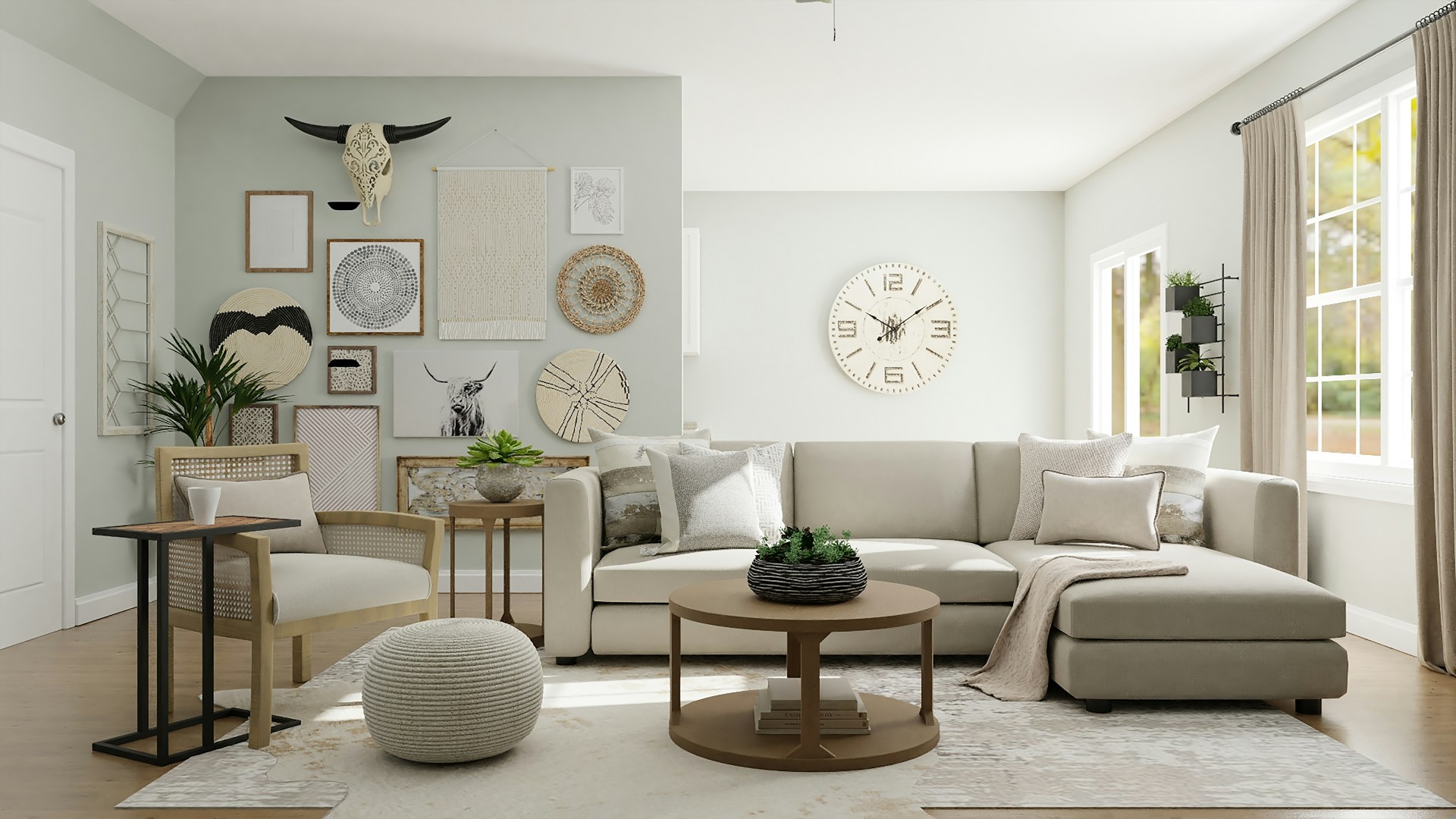
What Is Warm Minimalism?
Warm minimalism strips away visual clutter while adding warmth through materials, textures, and — critically — light. Where previous minimalist trends favored stark white walls under cool 5000K lighting, warm minimalism embraces:
- Earthy neutrals: Cream, sand, terracotta, warm gray
- Natural materials: Wood, linen, stone, ceramics
- Soft light sources: Hidden LEDs, diffused pendants, no exposed bulbs
- Color temperatures of 2700-3000K as the default, not an afterthought
The architectural lighting firm [Luce e Design](https://www.lucedesign.com/) described the trend in their 2026 forecast: "The era of the statement chandelier is yielding to the era of the invisible light source. Clients want to feel the light without seeing where it comes from."
This is where LED technology and interior design converge perfectly. Modern LED strips, cove lighting, and tunable-white fixtures make invisible lighting accessible at every budget.
Trend 1: The Death of the Overhead Ceiling Light
The single biggest shift in home lighting for spring 2026 is the move away from central ceiling fixtures as the primary light source. Interior designers have long known that a single overhead light creates flat, unflattering illumination with harsh shadows. Now, homeowners are catching up.
The replacement strategy is layered lighting — combining three types of light in every room:
Ambient (General) Layer
The base illumination, provided by sources you cannot see directly:
- LED cove lighting running along ceiling perimeters
- Recessed downlights with wide beam angles (60°+)
- Backlit wall panels or floating shelves
Task Layer
Directed light for specific activities:
- Under-cabinet LED strips in kitchens
- Adjustable desk lamps
- Reading lights mounted at headboards
Accent Layer
Decorative lighting that creates visual interest:
- LED strip lights behind TV units or artwork
- Small spotlights highlighting architectural features
- Candle-style LED bulbs in decorative sconces
According to the [Illuminating Engineering Society (IES)](https://www.ies.org/), properly layered lighting improves visual comfort, reduces eye strain, and can make rooms feel up to 30% larger than single-source overhead illumination.
How to Transition Without Rewiring
You do not need an electrician to move from overhead-only to layered lighting:
- Dim the overhead to 20-30% brightness (smart dimmer: $15-25)
- Add LED cove lighting along one wall or ceiling edge (LED strip kit: $25-40)
- Place 2-3 accent lights at varying heights (battery-operated LED pucks or rechargeable lamps: $15-40 each)
- Use warm white (2700K) for all ambient and accent layers
Total cost: under $100. Visual impact: transformative.
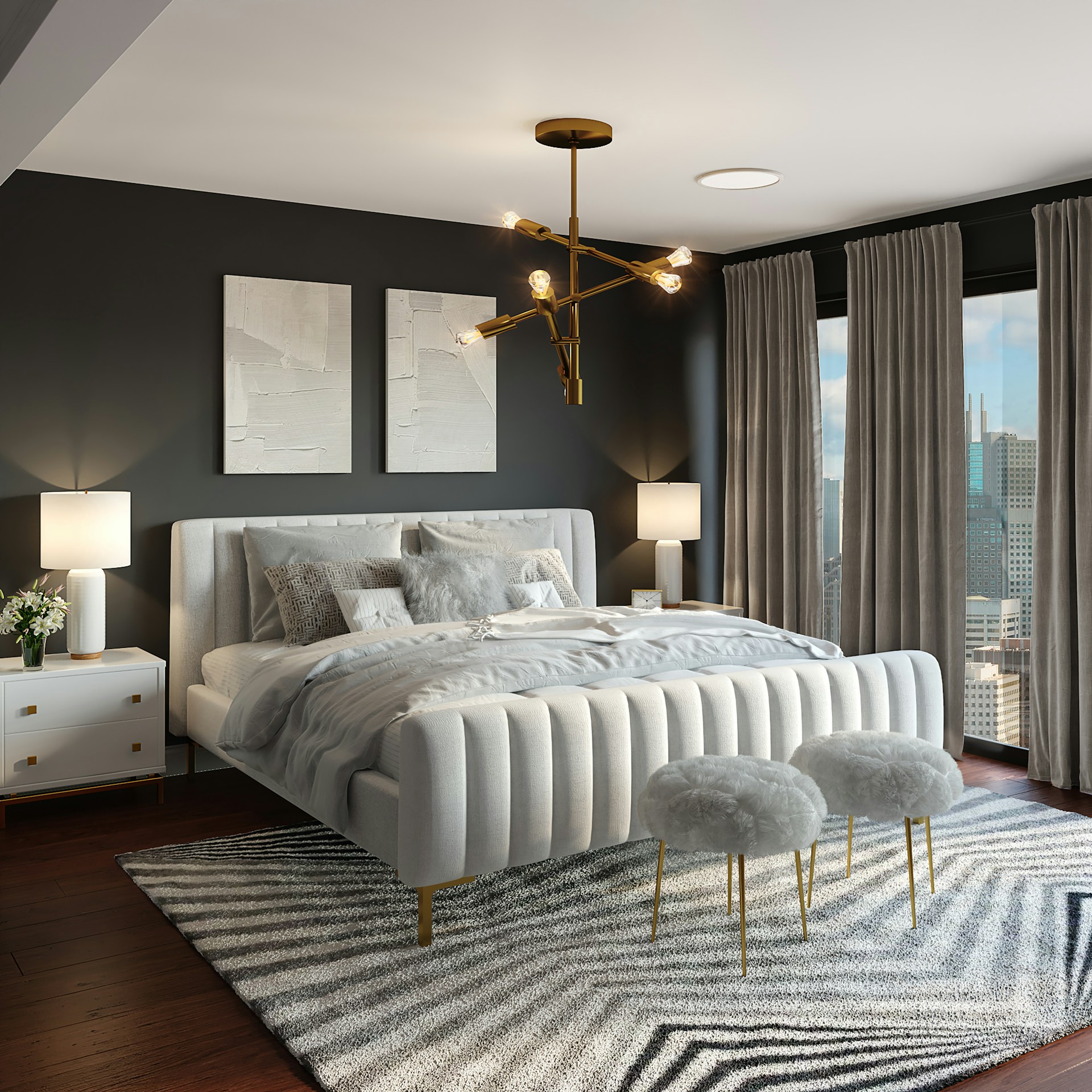
Trend 2: Tunable White — One Fixture, All Day
Tunable white LED technology — fixtures that adjust color temperature from warm (2200K) to cool (5000K) via app or automation — has existed since 2019. In spring 2026, it has crossed from enthusiast territory to mainstream expectation.
The driving force is circadian awareness. Research from the [National Institute of General Medical Sciences](https://www.nigms.nih.gov/education/fact-sheets/Pages/circadian-rhythms.aspx) has established that light color temperature directly affects alertness and sleep quality. Cool white light (4000K+) suppresses melatonin and promotes alertness. Warm light (2700K and below) supports melatonin production and evening wind-down.
Spring 2026 tunable white options at every price point:
| Product | Color Range | Price | Control |
|---|---|---|---|
| IKEA TRÅDFRI (E26) | 2200-4000K | $10 | DIRIGERA hub + app |
| Nanoleaf Essentials A19 | 2700-6500K | $18 | Thread/Matter native |
| Philips Hue A19 | 2000-6500K | $25 | Hue Bridge + app |
| Ketra by Lutron | 1400-10000K | $80+ | Lutron system |
The affordable end of this market has made "set it and forget it" color temperature a thing of the past. A $10 IKEA bulb can now deliver warm light at dinner and cool light during your morning routine — automatically.
Trend 3: Linear LED Profiles as Design Elements
LED aluminum channels and diffuser profiles were originally utilitarian — a way to mount LED strips neatly and prevent visible LED dots. In 2026, they have become a design element in their own right.
Designers are using linear LED profiles to create:
- Floating shelf lighting: Recessed into the underside of open shelving
- Architectural lines: Running along wall-ceiling junctions, stair nosings, or room dividers
- Furniture integration: Built into headboards, entertainment centers, and kitchen islands
The key products driving this trend are black-anodized aluminum profiles with milky diffuser covers — creating clean, modern light lines that complement the warm minimalist aesthetic. Brands like Klus, LED Aluminium, and Muzata offer profiles starting at $2-4 per foot.
The Professional Trick: Plaster-In Profiles
For a truly seamless look, plaster-in LED profiles mount flush with drywall, creating a light line that appears to emerge from the wall or ceiling itself. These require more installation effort (recessing into drywall or plaster), but the result is the closest you can get to "invisible light source" lighting.
According to the [American Lighting Association](https://americanlightingassoc.com/), plaster-in profiles have seen a 340% increase in residential specification since 2023, driven by warm minimalist interior design projects.
Trend 4: Portable Rechargeable LED Lamps
The hottest lighting product category of spring 2026 is not a fixture you wire in — it is the rechargeable portable LED lamp. These battery-powered accent lights have exploded in popularity because they:
- Require zero installation
- Can move from room to room, indoors to outdoors
- Charge via USB-C
- Last 8-48 hours per charge depending on brightness
- Come in aesthetically pleasing designs that work as decor objects
Brands like Zafferano, Kartell, and Lumio have created portable lamps that look like designer objects. Budget alternatives from Amazon and IKEA (the SYMFONISK series) start under $30.
Why this matters for warm minimalism: portable lamps let you add a warm accent light to any surface — a dining table, bookshelf, nightstand, or outdoor table — without any permanent installation. They are the easiest way to add layered lighting to a room.
Trend 5: Smart Lighting That Does Not Look Smart
The final spring 2026 trend is aesthetic invisibility for smart lighting hardware. The era of obviously "tech" smart bulbs and plastic hubs is ending. Consumers want smart functionality without visual compromise.
This manifests in several ways:
- Smart light switches that look like premium traditional switches (Lutron Diva, Brilliant)
- Filament-style smart bulbs with visible warm LED filaments (Philips Hue Filament, IKEA TRÅDFRI filament)
- In-wall smart dimmers hidden behind standard switch plates
- Under-cabinet smart strips that are completely invisible when off
The [Consumer Technology Association](https://www.cta.tech/) reported that 67% of smart home device purchasers in 2025 cited "aesthetic concerns" as a factor in brand selection — up from 41% in 2022.
How to Apply These Trends in Your Home
Living Room
- Replace overhead with [LED cove lighting](/blog/led-cove-lighting-ceiling-diy) along the ceiling
- Add 2-3 portable rechargeable lamps at varying heights
- Install tunable white smart bulbs in remaining fixtures
- Set a circadian automation: cool in morning, warm by evening
Bedroom
- Eliminate overhead light entirely
- Use LED strip behind headboard (2200K warm white only)
- Portable lamp on each nightstand
- Smart switch with "night" preset: 2200K at 10% brightness
Kitchen
- Keep task lighting (under-cabinet LED strips) at [4000K for food prep](/blog/color-temperature-guide)
- Add ambient cove lighting above cabinets at 2700K
- Pendant lights over island with tunable white bulbs
For deeper dives into the technical fundamentals, see our guides on [CRI and why it matters](/blog/cri-explained) and [how to cut LED strips properly](/blog/how-to-cut-led-strip-lights).
FAQ
What color temperature is trending for home lighting in 2026?
2700K (warm white) is the dominant color temperature for ambient home lighting in spring 2026, aligned with the warm minimalism trend. For task lighting, 3500-4000K (neutral to cool white) remains standard. The growing trend is tunable white fixtures that shift between warm and cool throughout the day.
How do you create layered lighting in a living room?
Combine three light types: ambient (LED cove lighting or dimmed ceiling lights at 20-30%), task (reading lamps, desk lights), and accent (LED strip behind TV, portable lamps on shelves). Use 2700K for ambient and accent layers, and 3500-4000K for task. A basic layered setup costs under $100 with LED strips and a few accent lamps.
Is warm white or neutral white better for home interiors?
For living spaces, bedrooms, and dining areas, warm white (2700-3000K) is preferred in 2026, creating a cozy, inviting atmosphere. Neutral white (3500-4000K) works better in kitchens, bathrooms, and home offices where task visibility matters. The ideal solution is tunable white fixtures that adapt throughout the day.
What are the most popular lighting fixtures in spring 2026?
Rechargeable portable LED lamps, plaster-in linear LED profiles, and filament-style smart bulbs are the three most popular categories. The common thread: all produce warm, diffused light from sources that are either invisible or aesthetically beautiful. The single overhead ceiling fixture is being replaced by multiple smaller light sources at varying heights.
How much does it cost to update home lighting for 2026 trends?
A basic warm minimalist lighting update costs $50-$100 per room using LED strips for cove lighting, smart dimming for existing fixtures, and 1-2 portable accent lamps. A full-room transformation with tunable white smart bulbs, linear profiles, and portable lamps runs $200-$400. Whole-home upgrades with professional plaster-in profiles and smart switches range from $1,000-$3,000.